
Introduction: Why Ecommerce SEO is your smartest bet for growth
The Indian ecommerce market is set to hit ₹7.5 lakh crore by 2026. That is a huge opportunity. However the problem is, most stores are leaving it on the table, this means burning cash on paid ads while margins shrink. SEO? It’s the unsung hero. Traffic that compounds and actually sticks around.
Doing SEO in India isn’t like the West. You’re up against Flipkart, Amazon India, JioMart, these are big giants with unlimited resources and your customers? They’re searching in Hindi, Tamil, and Hinglish.
This isn’t some American blog repurposed but a battle-tested one for India. Technical fixes for slow networks and content built for festival-season spikes. Whether you’re on Shopify, WooCommerce, or something custom; this is your roadmap. Build traffic that grows every month while competitors stay hooked on expensive ads.
Want expert guidance? Get your free SEO consultation today.
Understanding the unique Indian Ecommerce SEO landscape
Why a One-Size-Fits-All approach just won’t work
An SEO strategy that kills it in the US or UK often crashes and burns in India because:
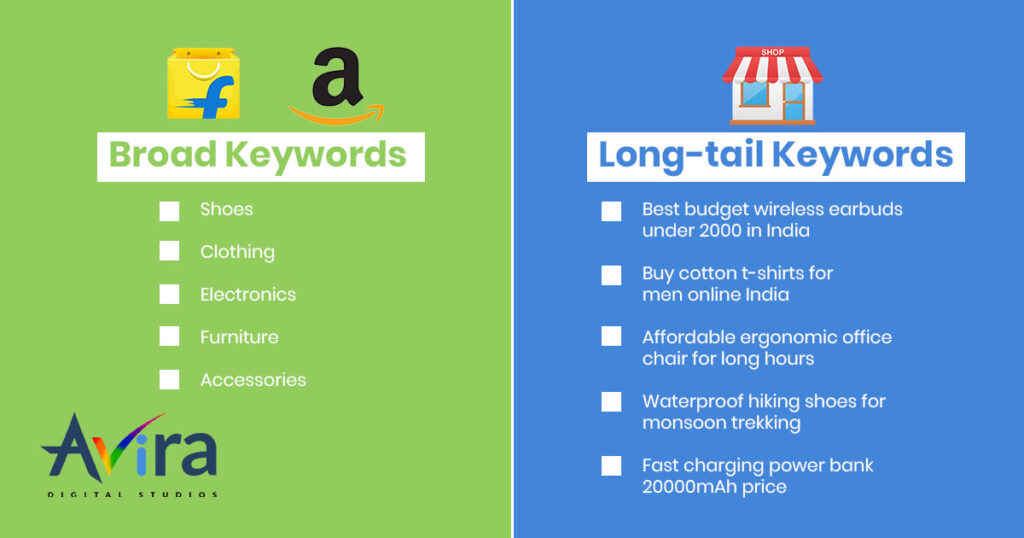
- The Marketplace Monopoly: Flipkart and Amazon India control over 60% of online retail. Your SEO strategy has to account for that. You’re not outranking them for broad terms like “buy running shoes”. But “buy Asics Gel-Kayano 29 size 9 Mumbai”? That’s your sweet spot. Go after specific, long-tail queries where you actually have a shot.
- The Mobile-First, Mobile-Only Revolution: Thanks to Jio, India basically skipped the desktop era. Around 85% of your customers will likely never see your desktop site. Google indexes mobile-first anyway. If your mobile experience is clunky or slow, your rankings will suffer, no matter how good your content is.
- The Trust Factor: Trust is still a hurdle. Cash on delivery makes up about 60% of transactions in Tier-2 and Tier-3 cities. Your SEO needs to build confidence right from the search results. Clear return policies and visible customer service. Social proof in your snippets.
How Indians actually search: A few key patterns
Nailing ecommerce SEO in India means truly understanding your customers’ search behavior:
- “Near Me” and Local Intent is Huge: Even for online purchases, Indians want local availability. Searches like “mobile phone shop near me” show strong purchase intent. Capture this through local SEO, even if you’re primarily online.
- The Rise of Multilingual Search: By 2026, half of Indian internet users will consume content in regional languages. People search in Hindi, Tamil, and transliterated terms like “kurti design.” Weave regional keywords into your strategy, especially for Tier-2 and Tier-3 cities.
- Voice Search is Booming: With affordable smartphones and better voice recognition, voice queries are growing 40% year-on-year. They’re longer, conversational, and question-based. Optimizing for natural language patterns is no longer optional.
The Technical SEO foundation for Indian Ecommerce
Getting the technical stuff right is the bedrock of any good SEO strategy. In India, with our incredibly diverse internet connectivity, it’s even more critical.
Speed optimization for real-world Indian networks
Western SEO guides tell you to aim for a 3-second load time. In India, you need to be more aggressive. Your customers are dealing with:
- Patchy 3G connections in smaller cities.
- A natural tendency to abandon slow sites instantly.
- Older Android devices that might not have the latest processing power.
Core Web Vitals, Indian Style:
When you audit your site, these are the metrics to watch:
- Largest Contentful Paint (LCP): Target under 2.5 seconds, even on a 3G connection. Aggressively compress your hero images and use modern formats like WebP. Implement responsive images with srcset so a user on mobile isn’t forced to download a massive desktop-sized file. Use an Indian CDN (like AWS’ Mumbai region or Google Cloud’s Mumbai region) to cut down on latency.
- First Input Delay (FID): Keep your JavaScript lean. So many Indian ecommerce sites are weighed down by heavy analytics scripts, chat widgets, and popup tools that cripple performance. Defer any non-critical JavaScript and focus on rendering the content a user sees first (above the fold).
- Cumulative Layout Shift (CLS): Always reserve space for images and ads. On a slow connection, when elements pop in late and shift the page around, it leads to frustrating misclicks. That increases your bounce rate and hurts your rankings.
Getting Image Optimization Right:
Images often make up 60-70% of an ecommerce page’s weight. Your strategy needs to include:
- Converting all product images to WebP (with JPEG fallbacks for older browsers).
- Implementing lazy loading so images below the fold only load when needed.
- Using a CDN with edge locations across Delhi, Mumbai, Bangalore, and Chennai.
- Creating and serving multiple image sizes based on the user’s device.
- Compressing your thumbnails aggressively. They’re often overlooked but can really slow down your category pages.
The mobile-first indexing reality

Here’s something a lot of store owners miss: Google primarily looks at your mobile site when deciding how to rank you. For Indian ecommerce, this isn’t just important, rather it’s everything. Your mobile site isn’t simply a smaller version of your desktop site. For maybe 90% of your customers, that mobile site is the only version they’ll ever see.
- Progressive Web Apps (PWA): They load fast, work offline, and feel like a native app without any download. For Indian customers with spotty connectivity, that’s a game-changer. Flipkart went all-in on PWA specifically for this reason and it paid off.
- AMP (Accelerated Mobile Pages): Not the trend it used to be globally, but still useful in India, especially for blog posts or product news. Just don’t prioritize it over building a genuinely fast, solid mobile site. That’s where your real focus belongs.
Managing crawl budget for large catalogs
If you’re in fashion, electronics, or grocery, you probably have a massive catalog like 10,000+ SKUs is totally normal. When your site is that big, how you manage Google’s crawl budget starts to matter.
A Smart XML Sitemap Strategy:
Instead of throwing everything into one sitemap, break it up. Keep separate sitemaps for your categories, your products, and your blog content. And here’s a tip: make sure your highest-margin products land in your primary sitemap.
Got out-of-stock products? Pull them out of your sitemap automatically. But keep those product pages live on your site with a “notify me” option. Don’t delete them.
Once your sitemaps are ready, submit each one separately in Google Search Console. Then keep an eye on how many pages are actually getting indexed.
Taming Faceted Navigation:
Category filters are great for users but a nightmare for crawl budgets. Every combination of size, color, price, and brand creates a new URL. You’ve got thousands of variations that Google could waste time crawling.
Here’s how to take control:
- Use rel=”canonical” tags that point back to your main category page.
- Block low-value URL parameters in your robots.txt file.
- If you can, implement AJAX filtering. It changes what users see without generating a new URL at all.
- For filtered pages that don’t have real search demand, just slap a no index tag on them and move on.
Using schema markup for better visibility
Schema markup is basically giving search engines a cheat sheet about your content. When you use it right, you get those rich snippets in search results which can seriously boost your click-through rates. For Indian ecommerce, focus on three types:
- Product Schema: Include both the MRP and your selling price so shoppers can see they’re getting a deal. Add aggregateRating to show those review stars. Mark your availability clearly like InStock or OutOfStock. And if you can swing it, add shipping details and COD availability right in the schema.
- LocalBusiness Schema: Got physical stores or warehouses? This is how you show up for all those “near me” searches. Make sure to include your store locations, hours, and contact info.
- FAQ Schema: Indian shoppers have questions about return policies, COD, delivery times, whether products are genuine. Add FAQ schema to your product pages and you’re not just answering those questions; you’re positioning yourself for featured snippets and voice search results.
How to handle out-of-stock products
Inventory going in and out of stock? Welcome to Indian ecommerce. It happens commonly but how you handle it affects both user experience and rankings.
Here’s the golden rule: never delete an out-of-stock page. Those pages have backlinks and ranking history. Throwing them away is wasted equity.
Instead:
- Keep the page live with clear “Out of Stock” messaging.
- Add a “Notify Me” option to capture emails.
- Show related products that are actually in stock.
- Update the page the second stock returns.
Keyword strategy for the Indian market
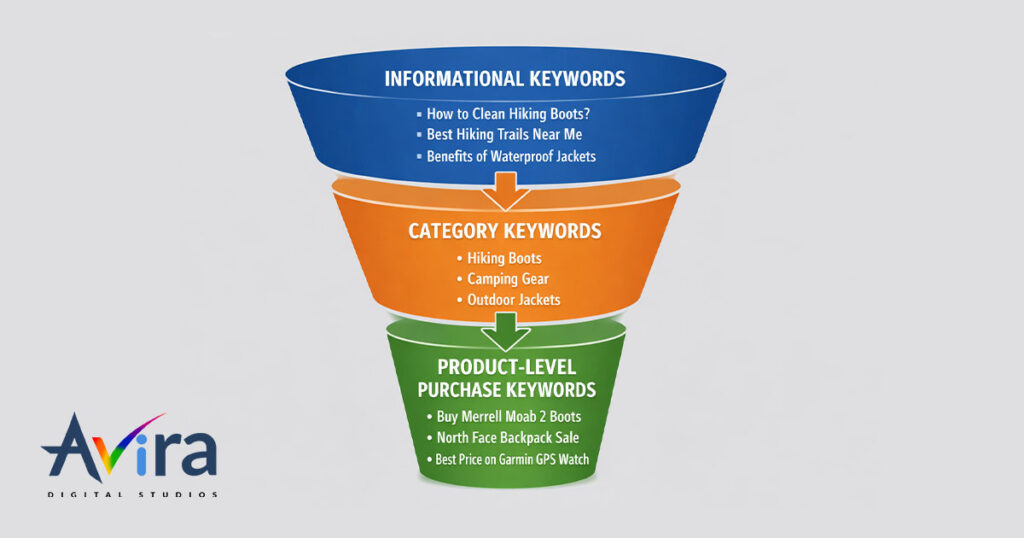
Here’s the thing about ecommerce SEO: going after the biggest, most obvious keywords is usually a trap. The real wins come from capturing traffic that’s actually ready to buy.
Targeting keywords on category pages vs. product pages
Think of your keyword strategy as operating on two levels:
- Category Pages: These are for broader terms with commercial intent. Think “men’s running shoes,” “women’s kurtis online,” or “4K smart TVs under 50000.” Can you compete with the big marketplaces on these? Maybe, maybe not. But with strong content and some authority built up, you absolutely can.
- Product Pages: This is where you get specific. This means the “Nike Air Zoom Pegasus 40 size 10.” “Fabindia cotton kurta medium red.” The full model number such as “Samsung 55 inch Crystal 4K UA55AUE60AKLXL.” These searches don’t bring in massive volume, but the people typing them in? They’re ready to buy. And the competition is way lighter.
How to do keyword research for Indian markets
Your Go-To Tools and Data Sources:
- Google Keyword Planner: Set your location to India. Even better, dig into specific cities. The insights get sharper.
- Google Trends: This is your best friend for understanding festival and seasonal demand. You’ll see exactly when “Diwali gifts” or “Dussehra offers” start picking up.
- Ubersuggest: It’s not fancy, but it gives you a decent read on what your Indian ecommerce competitors are up to.
- SEMrush/Ahrefs: Just make sure you filter for the Indian database. Otherwise your search volume data will be way off.
Localization and multilingual keywords
Think Transliteration, Not Just Translation:
If you want to do SEO right in India, you need to understand how people actually type. Not how they speak. How they type.
- Transliterated terms: It’s “saree,” not “sari.” “Kurti,” not “kurtee.” And we call them “mobiles,” not “cell phones.”
- Hinglish combos: People literally type “best mobile under 20000.” Or “sasta laptop.” Or “achhi quality saree.” That’s real search behavior.
- Regional variations: What they call “chappal” in the North might just be “chappals” elsewhere. A “banyan” in the East? That’s a “vest” in other parts.
Don’t just translate words and call it a day. Use Google’s “People also ask” and watch those autocomplete suggestions. That’s how you find the exact phrases Indians are using.
Building a seasonal and event-based keyword calendar
Indian ecommerce runs on festivals and events. Your content calendar needs to match that rhythm.
Major Shopping Festivals to Target:
- Diwali (Oct/Nov): Gift searches spike 6-8 weeks out. Start early.
- Dussehra: Electronics and appliances see a surge.
- Raksha Bandhan: Gifts for siblings take over.
- Wedding Season (Nov-Feb): Fashion, jewelry, home goods all blow up.
Key Sales Events:
- Republic Day (Jan 26), Independence Day (Aug 15): Shoppers are hunting deals.
- Platform Sales (Big Billion Days, End of Reason): Create comparison content and “best deals” guides to capture traffic.
- IPL & Sports Events: Cricket merchandise, jerseys, and TV searches spike hard during tournament season.
On-Page SEO for product and category pages
This is where your rankings turn into actual revenue. Every element on the page needs to balance what search engines want with what convinces a human to buy.
Optimizing your product pages
A Title Tag Formula That Works in India:
Try this structure: [Brand] [Model] [Key Feature] [Price Point/USP] | [Store Name]
Examples:
- Nike Revolution 6 Running Shoes Black Under 5000 | YourStore
- Samsung 253L Double Door Refrigerator 3 Star | Free Delivery Mumbai
Get your primary keyword in there naturally, but the main goal is to get that click. Indian shoppers are drawn to specific price points and clear benefits right in the search results.
Meta descriptions that actually get clicks:
Write something compelling that includes:
- The price or a clear discount (e.g., “Starting at just ₹999”).
- Trust signals like “Genuine Products” or “Easy Returns.”
- Delivery info like “Free Shipping” or “Same Day Delivery in Mumbai.”
- A touch of urgency if stock is low (e.g., “Only 2 left!”).
Just keep it under 160 characters so it doesn’t get cut off on mobile.
Writing product descriptions (Please, No Copy-Paste!):
Never just copy manufacturer descriptions. That’s a one-way ticket to Duplicate Content City.
Your product descriptions should:
- Lead with customer benefits, not just features
- Use natural keyword variations
- Address Indian customer worries: Is it genuine? Warranty? Easy returns?
- Use bullet points for easy scanning on mobile
- Include size guides with Indian standards (we fit differently than US/EU)
The power of user-generated content:
Reviews and Q&A sections are gold for two reasons:
- They add fresh, keyword-rich content to your pages automatically.
- They cover those long-tail keywords you might have missed (customers use their own natural language in reviews).
- They build trust and boost conversions.
Plus, if you implement a review schema, those star ratings in the search results can increase your click-through rate by 15-35%.
Optimizing your category pages
Category pages often drive more revenue than individual product pages because they capture higher-volume searches.
Content Above the Fold:
Add a short, unique paragraph (150-200 words) at the top of your category pages. It should:
- Naturally include your target keyword and some variations.
- Actually help the user understand the category and make a choice.
- Include links to relevant subcategories or buying guides.
Content below the fold:
For your more competitive categories, add a comprehensive section below the product listings (500+ words). This could include:
- A mini buying guide.
- A quick comparison of popular products in that category.
- Answers to frequently asked questions.
This “category content” approach helps your page rank for informational searches while still serving up the products for people ready to buy.
Smart internal linking:
Good internal linking spreads authority around your site and helps users discover more:
- Link to related categories (“You might also like…”).
- Feature your bestsellers or new arrivals with contextual links.
- Use breadcrumb navigation with schema markup.
- Create “Frequently bought together” sections.
Image SEO for Ecommerce
Good product images sell; optimized images also help you get found.
Alt Text that works:
Describe the image accurately and slip your keyword in naturally.
- Good: “Red Fabindia cotton kurta with intricate embroidery”
- Bad: “Kurta red cotton best price buy online”
File naming:
Rename those IMG_001.jpg files to something descriptive, like fabindia-red-cotton-kurta-medium.jpg.
Image sitemaps:
Submit a separate image sitemap to Google. It helps ensure all your product images are indexed and can appear in Google Image search.
Dealing with thin content
Large catalogs often create thin pages that drag down site quality.
Fix it: merge product variants onto one page, auto-generate descriptions from attributes, and leverage reviews and Q&A for unique content. Use smart templates that pull details for basic uniqueness across similar items.
Content Marketing to amplify your SEO
Good content does two things: it brings in people who are just starting to think about buying something, and it makes you look like you know what you’re talking about. Win-win.
The power of buying guides
Here’s something you’ll notice about Indian ecommerce: “best of” and buying guide content? It absolutely kills it here.
The “Best [Product] under ₹[Price]” formula:
This might honestly be the most searched content format in all of Indian ecommerce. You see it everywhere for a reason:
- “Best smartphones under 20000”
- “Best washing machines under 15000”
- “Best earphones under 1000”
These articles pull in people who are pretty far along in their shopping journey. And the best part? A single well-written guide can rank for hundreds of those long-tail variations. When you’re putting these together, don’t skimp:
- Include detailed comparison tables so people can actually see the differences.
- Be honest about pros and cons for each recommendation.
- Add price tracking info or deal alerts if you can.
- Make sure you’re linking clearly to your own products or relevant affiliate partners.
Comparison content:
You’ve got your “vs.” content. This is for customers who’ve done their research and are now down to the final two options:
- “iPhone 15 vs Samsung Galaxy S24”
- “Front load vs top load washing machines”
- “Air fryer vs oven”
They rank for high-intent keywords and can literally capture someone moments before they pull the trigger on a purchase.
Tapping into video content
Video consumption in India is massive. And YouTube? It’s the second largest search engine on the planet. You need to be in that game.
- Product demos in regional languages: You don’t need Hollywood production values. Just create simple, honest product demo videos in Hindi and other major languages. They can rank on YouTube by themselves. And when you embed them on your product pages? They keep people on your site longer, which Google notices.
- Use video schema markup: This is technical but important: add VideoObject schema to your pages. It helps Google understand what your video is about and feature it in search results.
- Optimize for YouTube SEO: Treat YouTube exactly like you’d treat Google. Optimize your video titles, descriptions, and tags for how Indians actually search. Include price points. Use words like “best” that shoppers commonly type in. It makes a difference.
Blog content that drives sales
Gift Guides:
Every major occasion is an opportunity:
- “Diwali Gift Ideas Under 1000”
- “Raksha Bandhan Gifts for Your Sister”
- “Valentine’s Day Gifts for Him”
This stuff captures all that seasonal traffic, and you get to link naturally to your product categories. Everyone wins.
How-to content:
“How-to” articles are your top-of-funnel workhorses:
- “How to choose the right running shoes”
- “How to care for your silk sarees”
- “How to set up your new smart TV”
They build authority. They help people. And from inside these educational pieces, you can link naturally to the relevant product categories.
Encouraging user-generated content
Your customers can create content for you. You just have to ask.
- Review generation: Set up email sequences after purchase asking for reviews. Offer loyalty points or small discounts if they include photos. Now you’ve got unique content and social proof in one go.
- Social media integration: When customers tag your products on Instagram, ask if you can embed those posts on your product pages. Fresh content, zero effort.
- Customer photos: Always ask permission to feature customer photos. It creates unique visual content, and it helps future buyers see what your product looks like on a real person and not a model, not a studio setup. That matters.
Local SEO for Indian Ecommerce
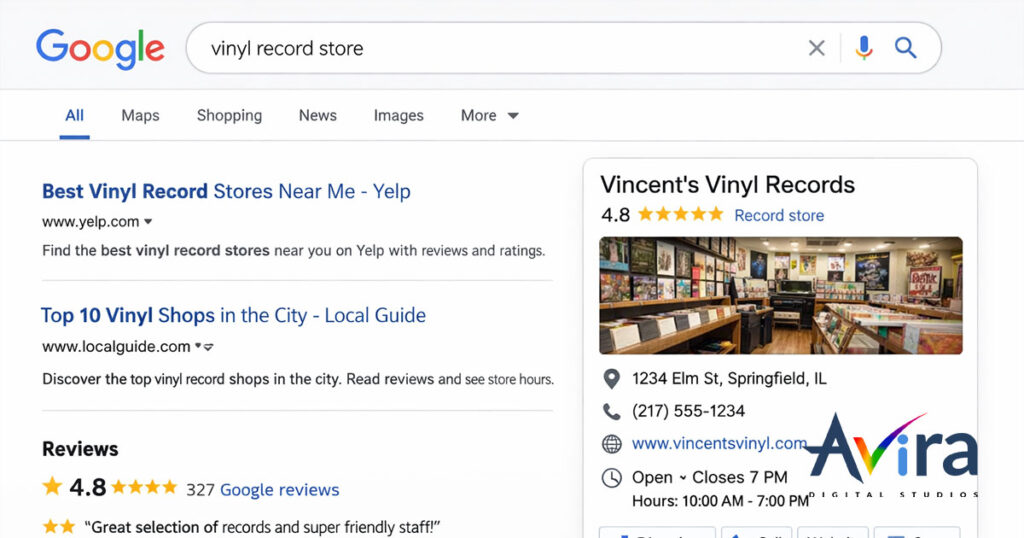
Even if you’re purely online, local SEO still has value. And if you’ve got both online and offline presence? It’s non-negotiable.
Getting your google business profile right
If you have physical stores, warehouses, or service centers:
- Claim and verify every single location. Don’t miss any.
- Be absolutely obsessive about NAP consistency (Name, Address, Phone number)
- Upload high-quality photos. Your stores, your products, your team. Let people see who they’d be buying from.
- Post regular updates. New arrivals, sales, events. Keep it fresh.
- Encourage reviews. And always, always respond to them. Good or bad.
Optimizing for “Near Me”
You can optimize for “near me” searches even without a physical storefront:
- Create location-specific pages for the major cities you serve.
- Mention local landmarks, neighborhoods, delivery areas on those pages.
- Work city names into your title tags and content where it makes sense.
- Build local citations by getting listed in relevant Indian business directories.
Link building for Indian Ecommerce
Backlinks still matter. They always will. But quality beats quantity every single time.
Digital PR strategies that work in India
- Festival-themed campaigns: Put together data-driven content about shopping trends during Diwali, Dussehra, wedding season. Indian media outlets eat this stuff up, especially during festivals.
- Outreach to regional media: Don’t just chase the big national publications. Regional language news sites and city-specific portals? They often have loyal audiences and are way more accessible for smaller brands.
- Conduct original research: Run a survey. Analyze your own sales data. Create unique insights like “India’s Online Shopping Trends Report 2026” or “The Most Popular Smartphone Brands in Every Indian City.” Original data is linkable gold as people love referencing this stuff.
Influencer collaborations for SEO
Partner with influencers, but not just for sales. Think about the SEO value:
- Get guest posts on their blogs.
- Secure product reviews that include the following link back to you.
- Create collaborative content pieces that are genuinely good enough that people link to them naturally.
And focus on micro-influencers in your specific niche. They’ve got more engaged audiences and their websites tend to feel more authentic.
Resource link building
Build tools that people actually want to link to:
- An EMI calculator for your high-value products.
- A size conversion tool (US/UK sizes to Indian).
- A comparison tool for popular product categories.
- In-depth buying guides that become go-to reference resources.
Make something useful, and the links follow.
Where SEO meets Conversion Rate Optimization (CRO)
Google’s algorithms care more and more about how users actually experience your site. Your SEO and CRO efforts? They need to work together.
Page experience signals
Core Web Vitals directly affect your rankings. Beyond just speed, make sure:
- Your site is genuinely mobile-friendly. No intrusive pop-ups. Buttons that are easy to tap.
- You’re on HTTPS. It’s essential for trust and for rankings.
- Your site is clean. No malware, no deceptive content.
Building Trust Signals for the Indian Consumer
Indian shoppers have specific worries. Address them directly on your product pages:
- Returns and Refunds: Make your policies clear and generous. A simple line like “Easy 30-day returns” can relieve so much purchase anxiety.
- COD availability: If you offer Cash on Delivery, make sure it’s visible. A huge number of Indian shoppers will abandon their cart if they can’t find a clear COD option.
- Authenticity guarantees: Badges like “100% Genuine Products” or “Authorized Dealer” tackle the very real fear of counterfeits head-on.
Mining your site search for SEO gold
Your internal site search data is a goldmine. Check what customers actually type, this reveals exactly what content you’re missing.
See “slim fit jeans” but no such category? Fix it. “Phone under 15000” with no buying guide? Create one.
Zero-result searches aren’t failures, they’re keyword opportunities staring you in the face. Someone wanted something you don’t have.
Autocomplete data shows natural phrasing. Use it and recurring searches? Build dedicated pages. Meet customers where they already are.
The checkout process and SEO
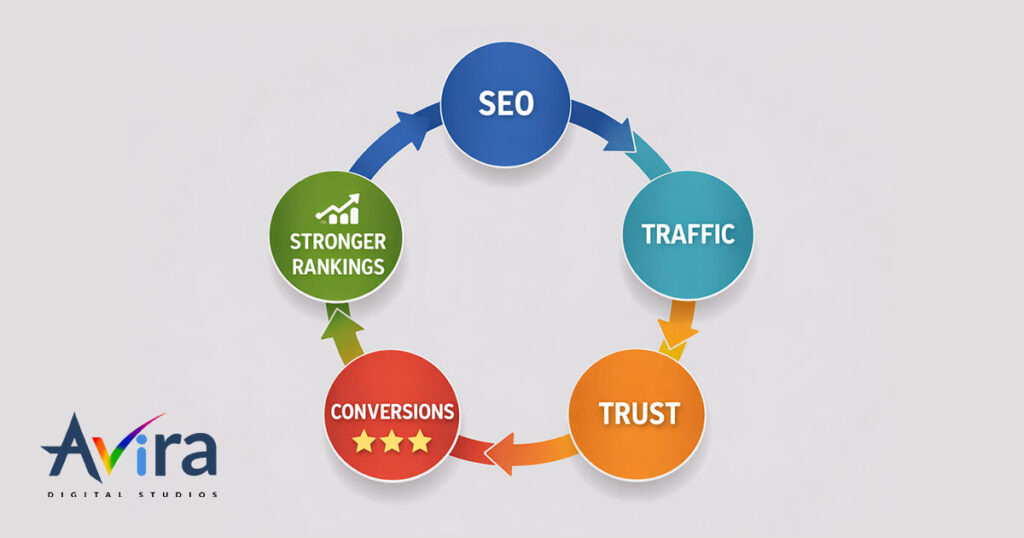
A complicated checkout process leads to abandoned carts. Lots of them. And high bounce rates? They can indirectly hurt your rankings. Google notices when people leave.
Here’s what to optimize for:
- Guest checkout options. Forcing someone to create an account before buying? That kills conversions. Let them check out as a guest.
- Multiple payment methods. UPI, wallets, COD, all these give people choices. In India, this isn’t nice to have; it’s essential.
- Clear progress indicators. Let users know how many steps are left. Nobody likes feeling lost in a checkout maze.
- Mobile-optimized forms. Use the right input types for phone numbers and PIN codes. Make it easy to type on a small screen.
Measuring your Ecommerce SEO success
Track what actually matters for your business. Vanity metrics are tempting, but they won’t pay your bills.
Key performance indicators to watch
Organic revenue: This is the one that counts. Track it properly in Google Analytics 4 with accurate ecommerce tracking and attribution. If revenue isn’t growing, nothing else matters.
Organic traffic by page type: Monitor your category pages, product pages, and blog content separately. This tells you which part of your strategy is working and what needs attention. Maybe your blog traffic is through the roof but product pages are flat. Now you know where to focus.
Keyword rankings: Yes, track your priority keywords. But focus on the right ones:
- Commercial intent keywords (the ones that actually lead to sales) over just informational ones.
- Those long-tail variations that drive conversions.
- Local and regional keyword performance. Don’t ignore them.
Click-Through Rate (CTR): Work on improving your titles and meta descriptions to get more clicks from your current positions. Here’s a truth bomb: a 10% traffic boost from better CTR is often easier than climbing one spot in the rankings.
Setting up Google Analytics 4 for Ecommerce
Make sure your GA4 is actually configured to give you useful insights:
- Enable enhanced ecommerce tracking so you can see product impressions, clicks, and purchases.
- Set up custom dimensions for things like product categories and brands.
- Create conversion funnels to see exactly where people drop off.
- Build audience segments for your organic traffic and analyze how they behave differently.
Using Google Search Console
Search Console is your best friend for SEO intelligence. Use it:
- Pull the Performance report, filter by your product category pages, and see how your money pages are doing.
- Check the Coverage report for any indexation issues, especially important if you have a large catalog.
- Look at the Core Web Vitals report broken down by page type to spot technical problems before they hurt you.
- Analyze the search queries bringing traffic. They’ll show you content opportunities you hadn’t thought of.
Keeping an eye on the competition
Don’t obsess over competitors, but don’t ignore them either:
- Compare your “share of voice” for your most important keywords.
- See how your backlink growth stacks up against theirs.
- Do a content gap analysis: what are they ranking for that you’re not? Those are opportunities wearing a name tag.
Common Ecommerce SEO mistakes Indian stores make (and how to avoid them)
Here are some pitfalls we see all the time. Learn from others’ mistakes:
- Copying manufacturer descriptions: Using the same description as every other retailer creates massive duplicate content issues. It’s lazy and it hurts you. Always rewrite.
- Ignoring regional language search: Sticking to English means you’re missing a huge and growing part of the market. Start with Hindi, then expand based on where your customers actually are.
- Assuming your mobile site is “Good Enough”: Don’t just trust your responsive theme. Test your site on actual budget Android phones with a slow 4G connection. The experience can be eye-opening and not in a good way.
- Blaming “indian internet” for slow speeds: We all deal with the same infrastructure. Instead of blaming it, optimize aggressively for it. Your competitors are.
- Deleting out-of-stock pages: This throws away all the SEO value you’ve built up. Keep the page live. Add a “notify me” option. Don’t start from zero when stock comes back.
- Relying too heavily on Paid Ads: Building a business solely on Google or Meta ads is risky. Ad costs go up every year. Organic traffic compounds. Invest in SEO as your foundation.
Confused about which strategy delivers real long-term growth? Read our detailed guide on SEO vs Paid Ads for long-term growth to make the right decision.
Future Trends: What’s next for Ecommerce SEO in 2026 and beyond
Stay ahead of the curve. These trends are coming whether you’re ready or not.
AI search and google’s SGE
With Google’s Search Generative Experience, AI will start generating answers directly in search results. What does this mean for you?
- Optimizing for featured snippets becomes more critical than ever.
- Structured data (schema) is key to helping AI understand your products.
- Focus on unique value propositions that an AI can’t easily summarize.
- Build your brand so customers start searching for you directly.
Want to understand how modern search really works? Explore how SEO, AEO and GEO work together to boost your visibility across Google and AI search.
Voice Commerce SEO
Voice assistants are getting better with Hindi and regional languages every day.
- Optimize for longer, more conversational, question-based queries.
- Implement speakable schema markup where it makes sense.
- Double down on local “near me” voice searches.
- Make sure your content provides clear, direct answers to specific questions.
Visual Search Optimization
Tools like Google Lens keep growing in popularity.
- You’ll need high-quality product images from multiple angles.
- Meticulous image SEO (alt text, file names) is non-negotiable.
- Proper categorization helps with visual similarity matching.
WhatsApp Commerce Integration
WhatsApp is India’s dominant platform. Period. Think about how it integrates with your SEO:
- Use the WhatsApp Business API for customer service.
- Create content that supports “Click to WhatsApp” ads alongside your organic search.
- Consider product catalogs within WhatsApp itself.
- Use QR codes on packaging to link to review requests and build more UGC.
“To understand the fundamentals behind these strategies, read our complete SEO guide that explains how search engines work and how to rank your website step by step.”
Conclusion
Running an ecommerce store in India isn’t easy. You’re up against Flipkart, Amazon, JioMart and their massive budgets. You’re reaching customers who speak different languages, search differently, and shop on affordable phones with spotty connections. Festival spikes. Trust issues. It’s a lot.
But here’s the thing: the very challenges make it an incredible opportunity. While competitors burn cash on paid ads that vanish overnight, you can build something that lasts. Something that grows month after month.
At Avira Digital Studios, we’ve lived this. Every strategy in this guide comes from real work in the Indian market, which is shaped by Jio’s mobile revolution, COD preferences, festival spikes, and a country that searches in Hindi, Tamil, Hinglish, and everything in between.
If you’re curious whether your store could do better, get in touch with our SEO team at Avira Digital Studios.